
Assisted dying: What is likely to happen now the Bill is in the House of Lords?
12 September 2025

 PA Wire/Jordan Pettitt
By Aine Fox, Nicholas Lester and Rhiannon James, PA
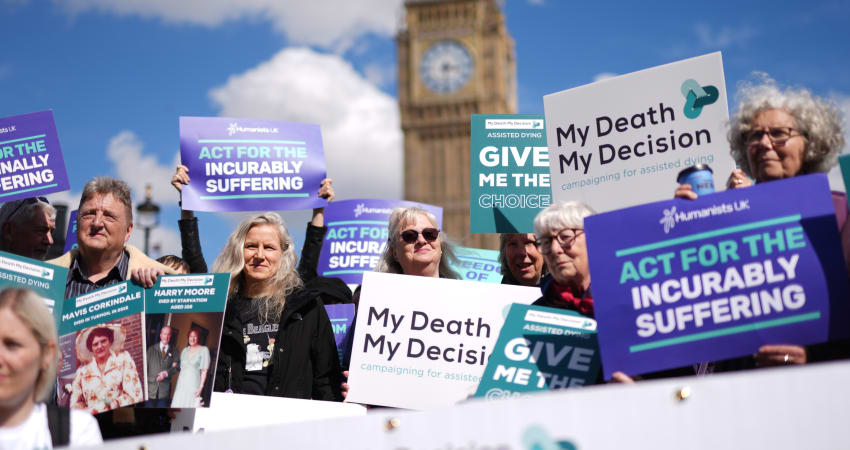
The assisted dying Bill will be debated in the House of Lords for the first time on Friday.
What is happening on Friday?
The Terminally Ill Adults (End of Life) Bill returns to Parliament for Second Reading in the Lords. Around 190 peers have registered to speak across 12 September and 19 September – potentially a record-breaking debate.
Lord Falconer will shepherd the Bill through the Upper House, taking over from Kim Leadbeater who sponsored it in the Commons.
Will there be a vote?
Not on the first of the two days of debate, but possibly on 19 September. Although unlikely, ff the Lords votes against the Bill, it falls and must restart next parliamentary session.
MPs in the House of Commons have already approved the principle of assisted dying.
What has happened so far?
This is the furthest assisted dying legislation has progressed at Westminster. MPs voted twice – passing Second Reading by 55 votes in November 2024, then Third Reading by just 23 votes in June after committee scrutiny.
What's in the Bill?
The proposed legislation would allow terminally ill adults in England and Wales, with fewer than six months to live, to apply for an assisted death.
This would be subject to approval by two doctors and a panel featuring a social worker, senior legal figure and psychiatrist.
The terminally ill person would take an approved substance, provided by a doctor but administered only by the person themselves.
What changes might be made?
Peers may propose amendments to strengthen safeguards against coercion. While this is infrequent, it is not unheard of.
Some have previously said safeguards in the Bill as it stands to act against coercion are not strong enough, so there might be attempts to change or add things to that end.
A Lords committee report suggested the Bill gives ministers too much power over issues like drug selection.
Will it definitely become law in England and Wales?
Not definitely. The parliamentary session ends next spring – if the Bill doesn't complete all stages by then, it falls and it will have to begin the legislative process from scratch, unless special arrangements are made.
Assisted dying will only become law in England and Wales if both the House of Commons and House of Lords agree on the final wording of the Bill.
If it does pass into law, the Government has four years in which to get an assisted dying service into place – meaning it could be 2029/30 before the first assisted death took place.
What obstacles could it face?
As a backbench Bill with a slim Commons majority, opponents may feel freer to obstruct it through filibustering, degrouping amendments, or "wrecking amendments". Any Lords changes must return to the Commons, creating potential for further delays in the "ping-pong" process between Houses and raising the prospect of a further impasse.
You might also like