
Blood pressure measured lying down better predicts heart risk, study finds
18 February 2025

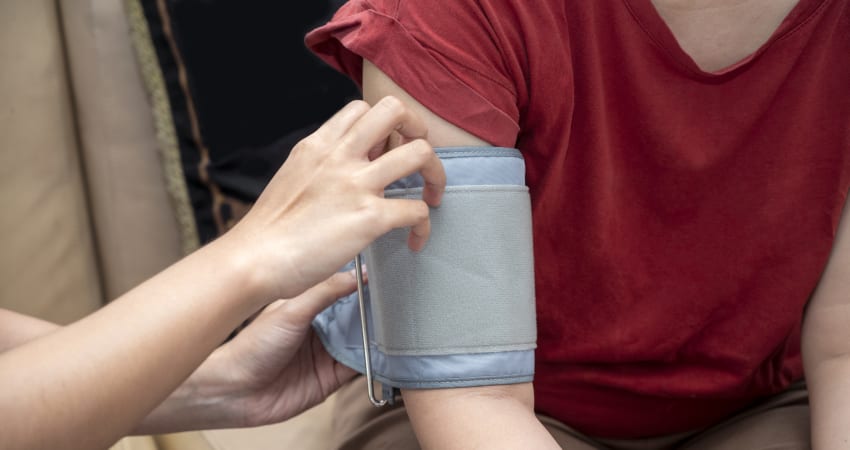 Getty/leolintang
By Olivia Bowthorpe
Blood pressure measurements taken when the patient is lying down may be more indicative of cardiovascular disease risk than when sitting, research suggests.
The study of 11,369 participants in the US Atherosclerosis Risk in Communities study found that regardless of seated hypertension, supine hypertension "had a higher hazard ratio for cardiovascular disease risk than seated hypertension".1
Supine hypertension measured alone was linked to coronary heart disease, heart failure and stroke among the middle-aged participants, regardless of antihypertensive medication use.
The research was led by Dr Stephen Juraschek, associate professor at Harvard Medical School, Boston, Massachusetts, and published in JAMA Cardiology.
Dr Juraschek told Doctors.net.uk: "Our findings demonstrate that high blood pressure when lying flat is related to cardiovascular disease even among adults who seem to have normal blood pressure in the seated position.
"Healthcare teams and patients may want to check for high blood pressure when lying flat. This can be done at a clinic or by patients using their own monitor at home."
You might also like