Issues with PA and AA regulation ‘cannot’ be resolved in court, GMC tells judge

9 June 2025

Credit: Getty/BrasilNut1

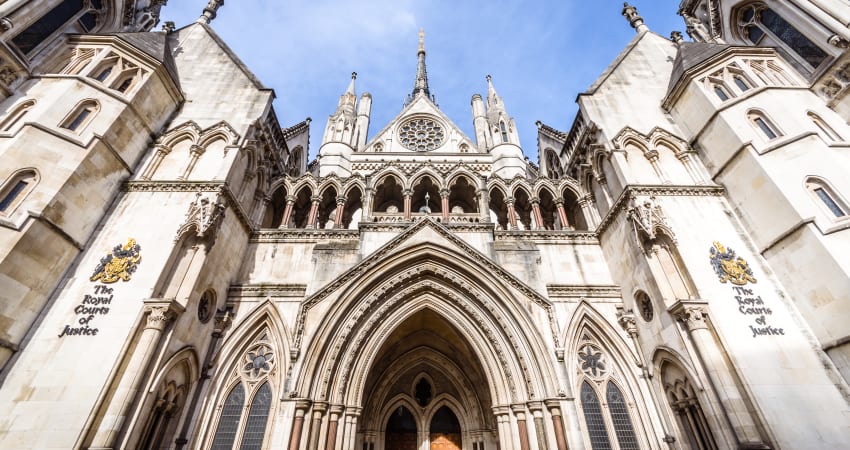
By Daniel Pye, reporting from Royal Courts of Justice, London

The regulation of physician and anaesthesia associates involves “big policy questions that a court cannot resolve,” the General Medical Council has told the High Court.

Rory Dunlop KC, representing the medical regulator, said that implementing a scope of practice can have "unintended consequences" and a “calcifying effect” on professions.

He was speaking during the third day of a legal challenge brought by campaign group Anaesthetists United (AU) and the bereaved parents of Emily Chesterton against the GMC over how it regulates PA and AA roles.

Supported by the British Medical Association, the Chestertons and AU have previously argued that the medical regulator should fulfil its role and produce a scope of practice so patient safety is assured, and people can have certainty about what is expected.

Dunlop told the court on Monday that the Department for Health and Social Care (DHSC) did not set out an express order for the regulator to set scope of practice for PAs and AAs.

He referred to evidence submitted by the Professional Standards Authority – which oversees the medical regulator - to the independent review into PA and AA roles and their safety.

“If you set a limit it becomes very hard to change it,” Dunlop said about evidence comparing how the UK regulates workforces to Canada, which more often uses legislation to define which tasks can be undertaken by a profession.

“When scopes are defined they have a calcifying effect on the bounds of professions.”

There are positives and negatives to this type of regulation which can produce "unintended consequences", Dunlop said. “There are big policy questions that a court cannot resolve,” he said.

If the GMC were to adopt scope of practices outlined by the royal colleges, it could lead to “defensive decision making” from doctors, he said.

Doctors who would otherwise be comfortable with the competence of a PA or AA may end up questioning if they will get in trouble with their regulator, rather than delivering appropriate patient care, Dunlop added.

He drew a difference between royal college advice and the GMC setting what would be a “hard limit”.

Dunlop also argued that the GMC does not have the available advice from experts to create a scope for every specialty a PA is involved in.

Parliament expected the GMC to set regulation in the same way as it does for doctors – for high level standards, not scope of practice over their individual tasks, Dunlop said.

There is no scope of practice for doctors and nurses, even though doctors may also work beyond their individual competencies, the court heard.

Some of these issues may be addressed by the independent review led by Professor Gillian Leng, the court heard.

In terms of supervision, Dunlop said that a doctor should determine “what knowledge, skills and experience” a PA has.

The GMC’s role is to give doctors advice on how to achieve good medical practice, Dunlop said, pointing to guidance published in April on how to supervise PAs and AAs.

“You can’t have a GP surgery staffed with PAs working on the phone,” he said. “That would be working completely independently.”

However, if the doctor is satisfied, the PA could manage some phone calls within their competence which would free up the doctor to do another task, Dunlop said.

Dunlop said that the GMC, which started to regulate PAs and AAs in December, had consulted other regulators when it was deciding how to regulate associates.

The General Dental Council had created limits on scope of practice for dental care practitioners “that led to problems and calcification” in the role, he said.

In response to the AU’s case that there has been little change since PAs and AAs became regulated under the GMC - Dunlop said the fact that they were now on a register has made a difference.

Earlier in the case, Thomas de la Mare KC, on behalf of the claimants, argued that PAs cannot be regulated in the same way as doctors as they have a different “risk profile”.

The “key driver” of the case is “concerns about patient safety and... about public trust in the regulation of the medical profession", he told the court in May.

De la Mare said that the current system of PA regulation under the GMC allows employers to push “the envelope beyond the threshold of what is acceptable”.

Emily Chesterton died in 2022 after a pulmonary embolism was missed in two appointments with a PA.

The case continued on Monday after a break from 16 May.

Justice Christina Lambert said she hoped to finish her written judgment before the end of July.


Log in or join for free to read more

You might also like