
‘The journey is not over’: What next for resident doctors' pay?
17 September 2024

 Angela Walker
By Emma Wilkinson
After two-thirds of British Medical Association resident doctor members voted to accept a pay deal from the government, NHS leaders have breathed a sigh of relief - but the union has warned that the campaign is "not over".
The deal, which amounts to a 22.3% uplift over 2 years, brings to an end a long-running dispute that saw eleven rounds, totalling 44 days, of strike action in just under two years that has been estimated to cost the NHS around £3 billion.
The deal for England is made up of 4.05% for 2023/24 on top of the previously awarded average 8.8%, taking last year’s pay uplift to an average of 13.2% - this will be backdated to April 2023.
In addition, each part of the pay scale will also be uplifted by 6%, plus £1,000, as recommended by the Review Body on Doctors’ and Dentists’ Remuneration (DDRB), with an effective date of 1 April 2024.
A doctor starting foundation training in the NHS will see base pay increase to £36,600, up from about £32,400.
For a full-time doctor entering specialty training basic pay will rise to £49,900 from about £43,900.
Pay is only part of the deal, with agreement also reached on steps to improve the experience and working conditions of those going through training, who will now be called “resident doctors”.
NHS employers said an implementation group will now be formed to discuss other detailed elements of the deal, including the flexible pay premia uplifts and a set of work on the exception reporting process.
A separate group will be led by NHS England to review the training model concerning the number and frequency of rotations.
Danny Mortimer, chief executive of NHS Employers said health leaders would “breathe a massive sigh of relief” to know that the ongoing dispute had been resolved.
“The last thing our members wanted was the threat of more strikes over what is expected to be a very difficult winter.”
But he added that there would be more work ahead and they would be working with the BMA, colleges, General Medical Council and NHS England on the non-pay parts of the agreement.
“While there is still a long way to go to address all the issues raised by resident doctors, including quality of work and education and their rotational system, we hope that discussions can move forward now pay has been agreed.
Nuffield Trust senior fellow Dr Billy Palmer told Doctors.net.uk: “We welcome the ballot result and hope it heralds the end of strike action for junior doctors.
“The pay deal will hopefully give a much-needed morale boost. However, without further effort, wider workplace and wellbeing issues will continue to chip away at junior doctor retention rates.
"Employers need to actively commit to improving work-life balance and support, meanwhile, the government should think boldly, including considering relieving some of the financial strain placed on junior doctors and other clinicians by delaying or scrapping their student loans in return for working in the public sector.”
More strikes?
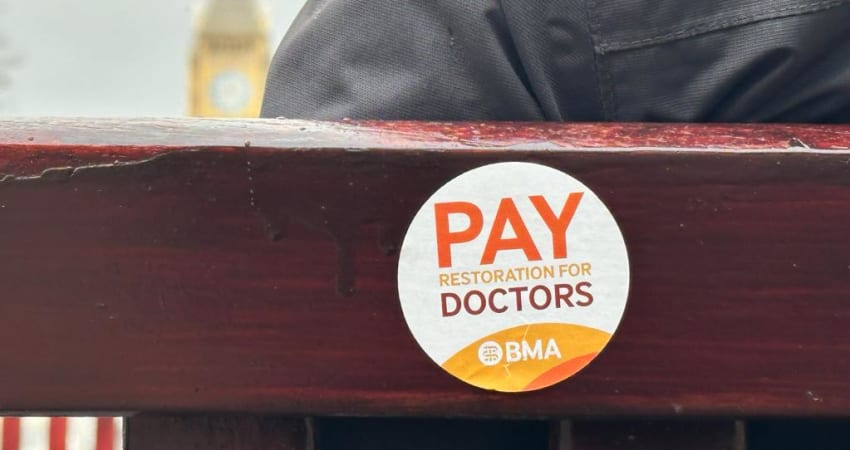
The BMA Junior Doctors Committee had recommended members voted in favour of the offer because it represented a “good enough first step” towards the path towards full pay restoration.
It “moves” the dial by about a third of what would be needed with the expectation this would shift more each year, it said.
Speaking on BBC Breakfast on Tuesday, Dr Vivek Trivedi, co-chairman of the BMA’s JDC, reiterated “the journey is not over” and more strikes could happen in the future should annual uplifts not be forthcoming.
“This is the first step towards restoring pay, which is all that doctors have wanted since the beginning of this campaign.
“As you’ll know, we’ve had a huge pay cut since 2008 but this marks a change in that trajectory.
“Doctors who were being paid just over £15-an-hour before this offer will now be paid a little over £17-an-hour, so it does mark an improvement, but the journey is not over.”
He added: “We want to hold on to our doctors, we want medicine to be an attractive profession so that they don’t escape to places like Canada and Australia and New Zealand.
“And this offer does not do everything in one go, but we’ve never asked for everything in one go, so as long as we continue on that journey, then we can inspire confidence for doctors to stay and to build back up our workforce so that we can bring healthcare back to a high-quality system that it used to be.”
Dr Trivedi said strikes would always be a “last case resort” when communications had broken down.
Deal ‘fell short’
Co-chair Dr Robert Laurenson said doctors needed security and a third of doctors who voted had felt the deal “fell short”.
He told LBC Radio that they would be looking from April next year to the pay review body’s recommendation to make sure that “we maintain that pace towards pay restoration” to ensure medicine is an attractive career.
There will also be questions about what the deal for England means in other devolved nations.
In June, resident doctors in Wales voted to accept an additional 7.4%, a total uplift of 12.4% for the 23/24 financial year. In Scotland they did not take industrial action after accepting a pay increase of 12.4% from the devolved government last year.
After the agreement for England was announced, the BMA Northern Ireland Junior Doctors Committee said they would be writing to the minister seeking an urgent meeting to discuss pay.
You might also like