‘Toxic’ PA debate down to failure to listen to doctors’ concerns, says Streeting

18 June 2024

Jane Symons/ Medical Journalists' Association

By Emma Wilkinson

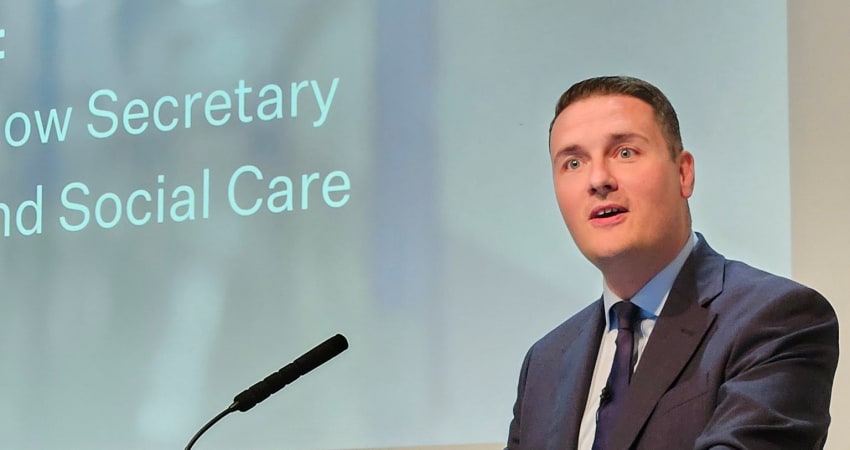
A failure of leadership to listen to doctors’ concerns about physician associates has allowed the debate about their role in the NHS to become “toxic”, Labour’s shadow health secretary Wes Streeting has said.

Speaking to members of the Medical Journalists’ Association about his plans for the health service should Labour win the general election, Mr Streeting said he had been “really depressed” about the state of the debate on PAs and because doctors’ legitimate concerns about substitution and scope of practice had not been listened to, “we've ended up with a far more toxic conversation than we might otherwise have had”.

He said it was important to “seriously address” the issues doctors are raising in making sure PAs are deployed appropriately, that they work within their scope of practice and that they are complementing the role of doctors not replacing them or substituting them inappropriately.

“That's important for patient safety. I also think it's important for a much better workplace culture.”

But he added they did have a place in the NHS and he had met with PAs who were doing valuable work with patients and becoming increasingly browbeaten about being devalued by colleagues.

“I think there's been a failure of leadership in not listening to doctors and allowing this toxic culture to erupt with barely any public commentary whatsoever from the leaders of this system.

“I've been genuinely shocked by the extent to which any number of organisations whether political or not could have gotten a grip on this and could have shown leadership and instead ran for the hills.”

NHS England has made clear PAs are "not doctors, and cannot and must not replace doctors" and has set out guidelines on how the roles should be supervised. It has previously said it will continue to "work together with stakeholders, doctors and MAPs [medical associate professionals] to ensure that all members of the NHS workforce are supported to provide excellent patient care".

Mr Streeting answered a number of questions from national and specialist journalists on his plans for the NHS, and he reiterated points he has made previously that there would be no more reorganisation, and that the money was simply not there for all the things Labour would want to do.

Trainee doctor strikes

In recent days Mr Streeting has done several interviews appealing to doctors in training to abandon their plans to go on strike just before the election. He has repeatedly said that the 35% pay rise they are asking for is “unaffordable” but that he would be willing to negotiate and would be on the phone “on day one” to settle the dispute.

In his opening remarks, Mr Streeting commented that the strikes had cost an “avoidable” £3 billion. When asked if it would be cheaper for the next government to just meet the BMA’s demand, he said they would not meet them on the 35% “because the money isn’t there at this stage” but that they would negotiate on what that would look like over time. “There is space for a discussion," he said.

But there is a lot more that can be done on working conditions, he said, adding that he was “genuinely angry” about the way trainee doctors are treated by the NHS, giving the example of a doctor who had small children and a partner with cancer whose circumstances were not taken into account when allocating her rotation.

“That does not sound to me like a good employer, a respectful employer, someone who values their staff and is investing in the future of the service. Some of this is about basic lack of respect of staff and on areas like that I think there's room to work together where everyone wins.”

In response to calls from Mr Streeting to cancel the strike, the BMA has said it was “promising” that Labour wanted to be proactive about resolving the dispute because trainee doctors did too.

“If they form the next Government we look forward to negotiating with them immediately. It is perfectly possible to resolve the dispute quickly,” Dr Vivek Trivedi and Dr Rob Laurenson, co-chairs of the BMA’s junior doctors committee said. But they added there would need to be more detail about what the proposal really means.

In their manifesto, the Liberal Democrats have said they would establish a properly independent pay review body. The Conservatives said they would increase NHS spending above inflation and recruit 28,000 more doctors. “We will also improve working conditions for all NHS staff”, it added.

In the Sky News leaders debate in Grimsby last week, Rishi Sunak said progress on waiting lists had been made difficult for a number of reasons, including that industrial action had hampered progress.

Reality check

When questioned on managing expectations and on whether his plans were actually doable, Mr Streeting said: “We can't wave a magic wand and fix everything on day one or fix everything by Christmas. But what we do have is a plan to hit the ground running."

He added: “I think everyone is miserable about the status quo in the NHS. Sometimes there will be competing interests between the patient and the provider and it is my job to champion the interests of the patient over and above always.”
But he said patients and staff who love the NHS can see it is not working and there was a need to be honest about the scale of the crisis in the NHS and the need for reform and modernisation “not simply more investment”. He added he would have liked to have been more ambitious on some issues but it had to be affordable.

“I am acutely aware that there are a number of burning deck issues in the NHS at the moment. We have to focus on immediate crises and trying to tackle the things that are standing right in front of us but there’s also an opportunity to take the right long-term decisions”.

GPs and upcoming industrial action

While Mr Streeting did not comment specifically on BMA proposals for GP industrial action later this year, he said the proportion of the NHS budget spent on primary care should increase because that will be better for patients and “will be better value for taxpayers”.

“We think it's of vital importance to the future of the NHS that we fix the front door to the NHS in primary care.” And he pointed to the value of continuity in prevention, better care, earlier diagnosis, faster treatment all of which is “often not just better for patients but actually saves a hell of a lot of money”, he said.

The Liberal Democrats have a range of specific proposals on GPs including the right to see a GP or most appropriate staff within 7 days. They said they will also increase the number of full-time equivalent GPs “by 8,000, half by boosting recruitment and half from retaining more experienced GPs” as well as removing top-down bureaucracy.

The Green Party has also said it will push for rapid access to a GP and same day access in case of urgent need and will increase the proportion spent in primary care to £1.5 billion by 2030.

In the Conservative manifesto there are also plans to shift care from hospitals into local communities by expanding Pharmacy First, building or modernising 250 GP surgeries and building 50 more community diagnostic centres.

Reform UK said it would have a campaign of “Pharmacy First, GP Second, A&E Last” and NHS patients would get a voucher for private treatment if they cannot see their GP within 3 days.

‘Corridor care’, delayed discharge and social care

Mr Streeting was asked whether he would put an end to people being treated in corridors, and how this interacted with delayed discharges and not having a fully costed social care plan. He said “corridor care is not acceptable” was an “abysmal experience for patients and also a huge contributing factor to the moral injury experienced by staff”.

The immediate step would be “ensuring that NHS and social care partners work more effectively together” to fund ways to get people out of hospital into step down care or supported in their own homes. This would include the NHS spending money through local authorities or social care partners to stop people being stuck in expensive hospital beds. Labour’s fair pay deal for social care would also help staffing shortages, he added.

But the reform of social care is a “longer term challenge” on which he wants to see cross-party working. On the failure over many years to solve social care, he said “there was plenty of blame to go around” and “our commitment to a 10 year plan for social care there's a seriousness of intent there that has eluded successive governments”.

Tackling social care is mentioned across party manifestos.

The Conservatives said they were committed to supporting a “high quality and sustainable social care system” with a multi-year funding settlement at the next spending review.

The Liberal Democrats have dedicated an entire section to care, and wish to provide “predictable consistent funding” and make careers in social care more attractive.

Reform UK have said they would set up a royal commission for adult social care within the first 100 days.

Elective backlog

In their manifesto, Labour committed to cutting NHS waiting times with 40,000 more appointments every week investing an extra billion pounds in waiting lists and that could be “mobilised fairly quickly”.

Mr Streeting said this would include “Formula One pitstops” delivering the same number of appointments in a day that would normally be done in a week. He wanted to see and faster adoption of approaches that had been shown to work across the whole NHS, he added.

He also confirmed that Labour would aim to get the 18-week target for elective care back to 95% within their first term if elected, noting they had done it before and would do it again.

In its manifesto, Reform UK has set out an additional £17 billion a year for the NHS - significantly more than any other party and said it would eradicate waiting lists in two years - although questions have been raised about the sums. It also wants to move to a new insurance-based funding model.

While not specifically addressing waiting lists, the Liberal Democrats have committed to training, recruiting and retaining doctors and nurses as well as specific measures to tackle access to mental health and cancer care.

The Conservatives said with record funding the NHS was delivering more appointments than ever before and they were committed to ongoing improvements in waiting times.

“We will return performance to the levels set out in the NHS Constitution by the end of the next Parliament”, the party pledged.

Doctors.net.uk has also requested interviews with health spokespeople from the other main political parties.


Log in or join for free to read more

You might also like